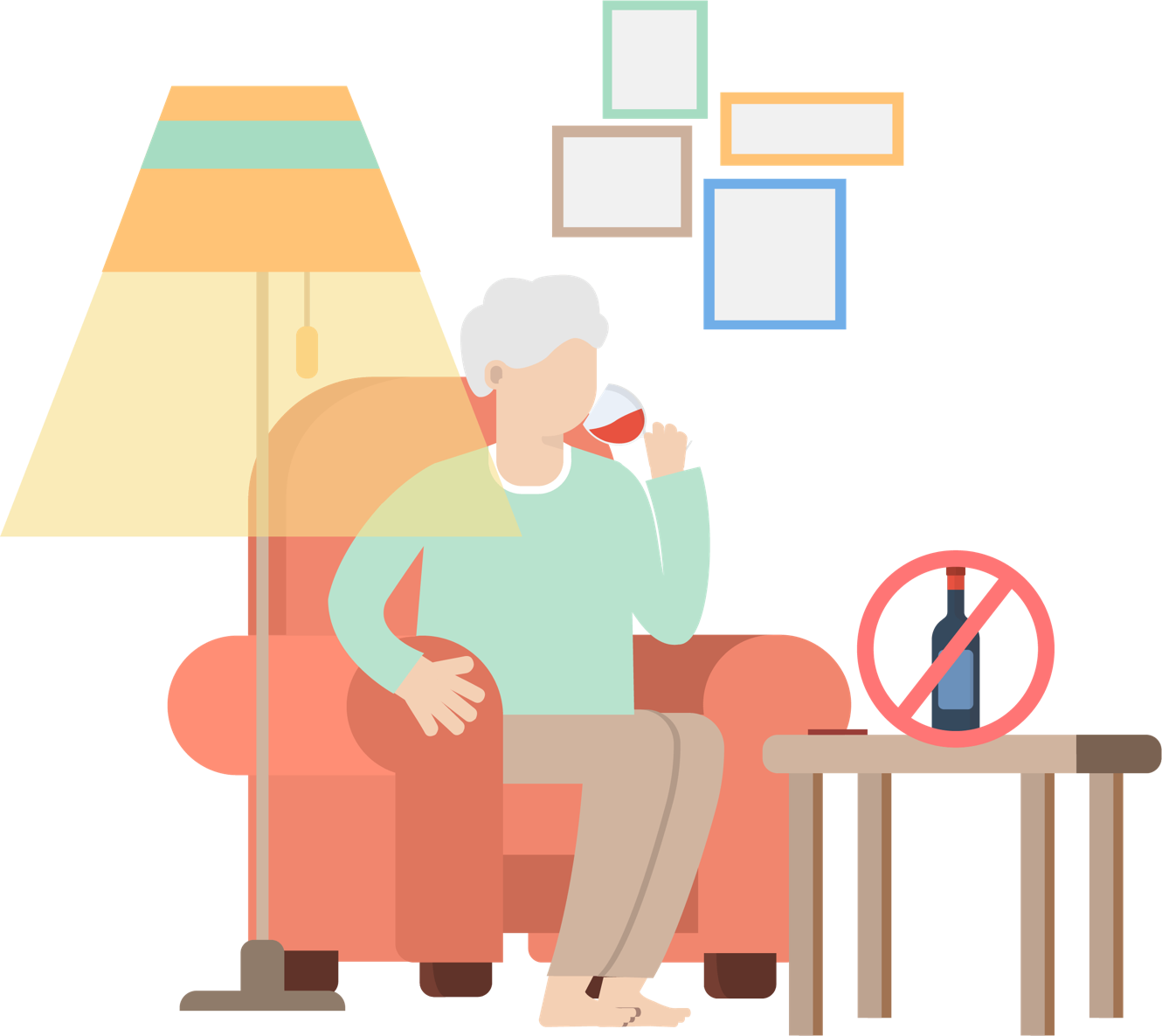
You do not have to have drink to excess or be dependent on alcohol to benefit from a significant reduction, or a complete stop, in your drinking.
Whether you drink occasionally or regularly, consuming alcohol in the days and weeks before the intervention can greatly increase your risk of complications.
The risks from alcohol
Even small amounts of alcohol affect your body’s reaction to the procedure, and make it more likely that you will have problems either during or after your operation.
Alcohol increases your risk of heart muscle injury, lung infection, and bleeding and reacting badly to the anaesthetic drugs.
To give your body the best chance of a successful recovery, avoiding alcohol both before and after your heart procedure is strongly recommended.
If you regularly drink more than three alcoholic drinks per day, tell your care team or doctors before your operation.
They will not judge you; they need to know because the effects of alcohol withdrawal are also dangerous and increase your risk of complications from your procedure.
The benefits of not drinking alcohol
All reductions in alcohol intake in the weeks prior to intervention will improve the outcome and results of your procedure.
Tips to help you stop drinking alcohol
Stopping anything that has become a habit is difficult, even if it’s only for a few weeks.
Here are some tips to help you stay motivated:
- Set a date to stop. Write this date down to make it more ‘official’.

- Think about why you are stopping. You could write this down too. For example, “I will stop drinking next Tuesday before my operation at the end of the month so I can get better faster.”
- If you find that habits, places, times or behaviours trigger your desire to have a drink, plan how you can avoid those situations and what you can do instead to distract yourself.
- You could do an activity like going for a walk, doing something else or calling a friend for a chat and to get support.
- Set small but achievable milestones, such as a day, then a week, without drinking. Reward yourself when you reach these targets.

LOCAL INPUT REQUIRE Talk to your general practitioner or hospital care team for help and advice about resources and support groups that are available to you.