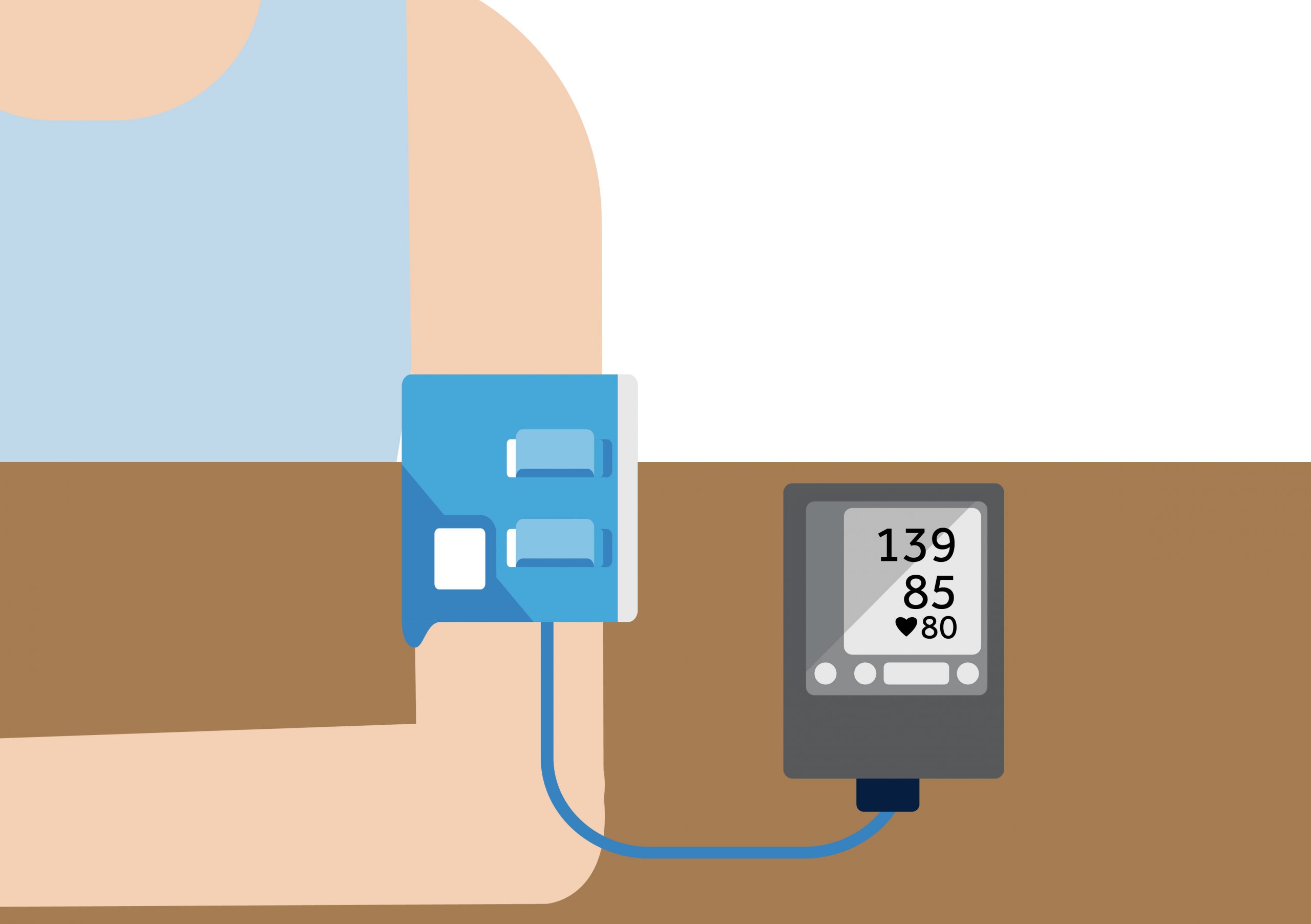
High blood pressure, also known as hypertension, is another condition that can lead to the development of many heart diseases, including arterial stenosis.
The effects of hypertension are not always obvious and so it is important to monitor your blood pressure and, if necessary, take medications to lower it.
The blood pressure result is given as two numbers, one over the other in units called millimetres of mercury (mmHg). The systolic blood pressure is the larger number.
It is measured when your heart muscles contract during a heartbeat to squeeze blood out and around the body.
The second, lower number is the diastolic pressure. It is measured when your heart relaxes, in-between beats, to refill with blood ready for the next pump.
A typical blood pressure for a healthy adult is between 90/60 and 120/80 mmHg.
The higher your systolic blood pressure, the harder your heart is having to squeeze to move blood around your body. The higher your diastolic blood pressure, the less your heart is able to relax.
FOR LOCAL INPUT
For patients with aortic stenosis, the target blood pressure is XX/XXXmmHg.